Wick Lubricators
Manufacturer & Supplier of felt wick lubricators
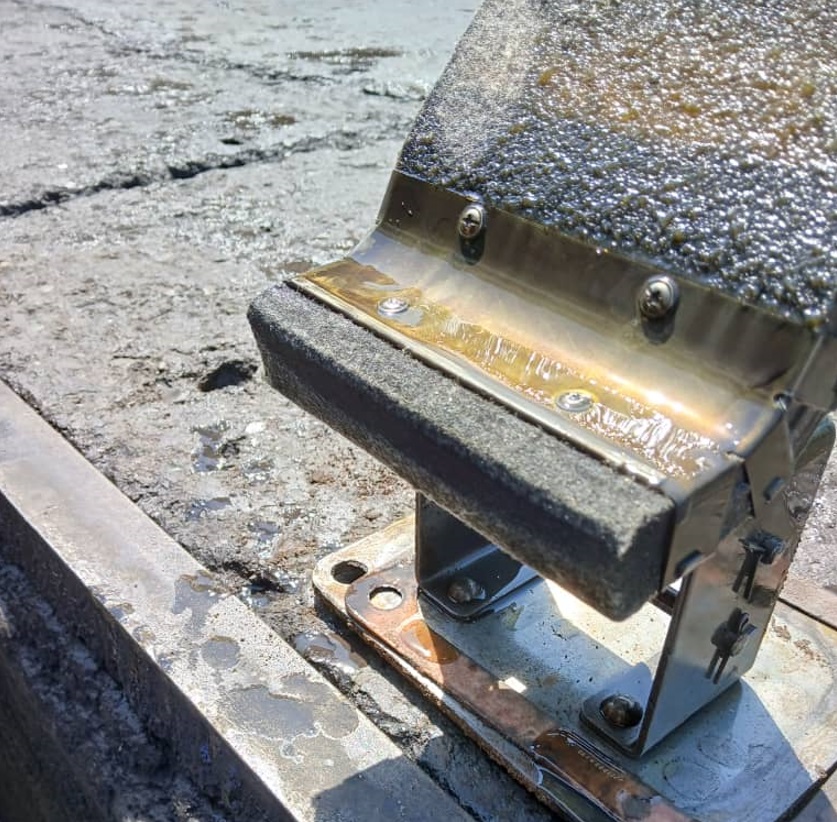
Wick lubricator :
Wick lubricator is made from special quality felt wick where
rapid oil transfer woolen wick is embedded in it. This enhances the wicking capabilities
and lubrication of felt. Our Wick lubricator delivers a consistent,
controlled supply of lubricating oil to machinery bearings or moving
parts using capillary action. A wick lubricator in a railway
traction motor is a passive lubrication system that continuously
feeds oil to the motor's axle suspension or armature bearings via
capillary action process. It ensures consistent oil lubrication,
filters out contaminants, and prevents bearing failure without
requiring complex mechanisms.
Working process of our Wick lubricator
:
A reservoir holds a supply of high quality oil , our felt lubricator
one end is submerged in the oil and the other end touches the part
which needs lubrication. Through Capillary Action properties our
Wick lubricator naturally draw the oil upward and continuously
transfer it to the friction point.
Key Components:
● Wick Lubricator or Oil Wick pad : Made from High Quality wool felt
or specialized felt. It is highly absorbent and draws oil upward
from a reservoir.
● Oil Reservoir: A cavity or housing located beneath the bearing or
axle cap that holds the oil lubricant.
● Positioning Spring: A mechanism (often a coil or torsion spring)
that pushes the wick firmly against the rotating axle or bearing
surface.
Advantages and features :
● Automatic & Controllable: The transfer and flow of oil
operates automatically as long as the felt wick is touching the oil
reservoir filled with oil. The feed rate can be adjusted by changing
the size of the wick, adjusting the oil level, or manually
raising/lowering the felt wick lubricator.
● Filtration: Our
felt wick lubricators are manufctured from Natural Wool fibers which
acts as a natural filter, preventing dirt, dust, and contaminants
from entering the sensitive bearing.
● Self-Regulating: Oil
is transfered and delivered continously at a steady, slow rate,
making it ideal for machinery that requires continuous, light
lubrication without flooding.
● Oil Retaining: The wick
lubricator retains the oil and does not discharge it quickly. It
holds and stores for longer period of time.
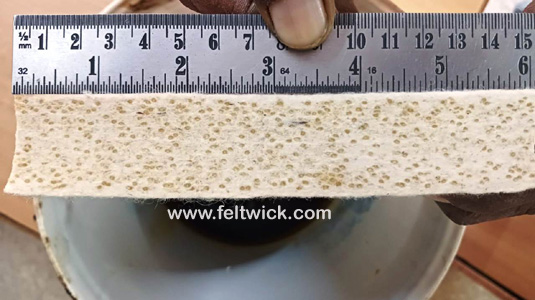
Application / Uses :
Wick lubricators are highly valued for their simplicity and require
no electrical power or complex pumps. They are traditionally found
in:
Railroad Locomotives: Our Wick Lubricator pad Assembly is
used in Traction Motor of Diesel locomotive engines. Widely used to lubricate train axle
journals and traction motor bearings.
Industrial Machinery:
Used on horizontal shafts, sleeve bearings, and old-style machine
tools.
Electric Motors: Used for the sleeve bearings found in
small motors.
In vintage two-stroke marine engines, felt wick
lubricator are used primarily in auxiliary drip-feed or siphon
oilers for mechanical linkages, governor drives, and small bearing
assemblies. They utilize capillary action to pull lubricant from a
reservoir and deliver it at a slow, continuous rate. In low-speed
two-stroke marine crosshead engines felt wicks are part of the
engine’s auxiliary lubrication systems. The felt uses capillary
action to draw oil from a reservoir and dispense it at a slow,
constant rate. Wick lubricator delivers cylinder oil to
slower-moving components, such as the crosshead guide bars or
specific control linkage points.
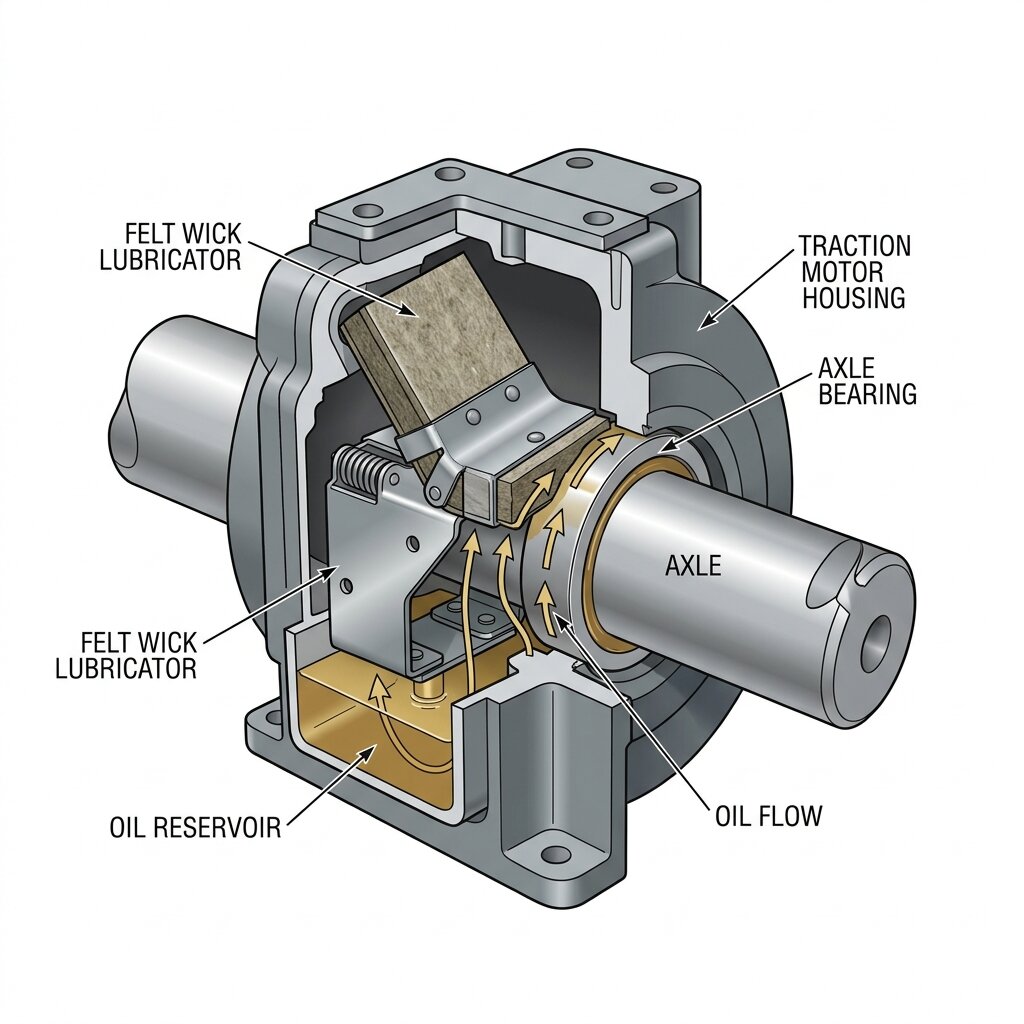
Lubrication of bearing surfaces is maintained
by the supply of a constant thin film of oil between the surfaces of
the bearing and the shaft. In most bearing applications in steam
traction engines and locomotives, a small but constant supply of oil
is maintained by the use of traditional wick lubricator which syphons
the oil from usually a cup and down a small tube communicating with
the bearing surface. Depending on the type of bearing, the type of
lubricating oil may differ, with generally a lighter oil for high
speed bearings and a thicker oil being used for lower speed shafts.
The Choice of lubricating oil depends on the method of
lubrication. It's important to use a genuine high quality wool felt
wick lubricator for best performance, thereby ensuring excellent
wicking ability. Our wick lubricator can be customised into any
shape and size. The number of wick strands will also depend on the
size of the lubricator and flow of oil required.
There are
generally three types of lubricating cup application:
1)
Rotating Bearings, such as Big-End bearings
2) Sliding, such a
pistons, Little-End bearings
3) Stationary, such as cup oilers to
main shafts and axle bearings
It is very important for wick
lubricator to function otherwise without it may damage the steel
shaft if no oil is lubricated, which would result in bigger
loss.
Maintenance Tip & Best Practices:
Because they operate in heavy-duty and often dusty environments
(e.g., freight locomotives and EMUs), wick lubricators require
routine inspections, Technicians must routinely monitor the drip
rate :
● Glazing: The end of the wick in contact with the rotating shaft
can sometimes become glazed (hardened and sealed) by the heat and
friction. If this happens, the glazed end must be carefully trimmed
off to expose a fresh, absorbent surface.
● Contamination: The wick acts as a filter, meaning it will
eventually clog with dust, debris, and metallic particles. Clogged
wicks fail to draw oil and must be cleaned or entirely replaced.
● Reservoir Levels: Operators must periodically check the reservoir
and top it up to ensure the wick remains submerged in sufficient
oil.
If the oil reservoir runs dry, the mechanism will experience
metal-to-metal friction and damage the parts.
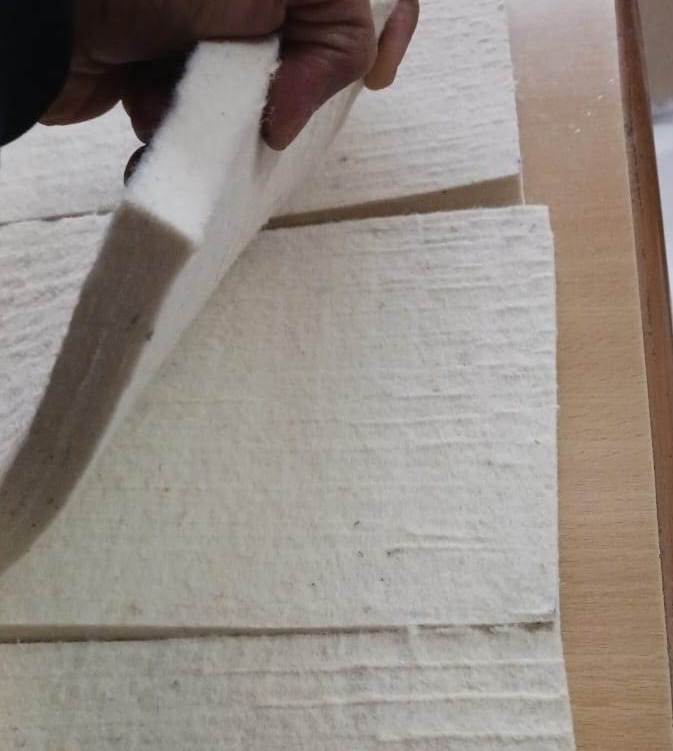
Wick pad Lubricator Assembly
We are manufacturer of Wick pad Lubricator Assembly for Traction
Motor locomotive parts. The wick lubricator are produced from High
quality long length wool fibers which are thoroughly checked for
quality assurance purpose. We assure highest quality premium grade
Wool Wick material & manufacturing by Experience people in advanced
machines along with fully equipped measuring and testing facilities,
our Quality team checks the product durability and long life. Traction motor is one of the main part
behind the complex propulsion systems that runs the Goods and
passenger locomotive engines.
Lubrication of traction motor suspension bearings is provided by
felt wick inserted in the oil reservoir in each bearing cap, which
ensure that the quantity of oil required for the lubrication of
bearing as available continuously.
The oil is drawn up from the oil reservoir to the bearing by
capillary attraction in the strands of the felt and it is therefore
essential for proper lubrication to provide a continuous path for
the oil flow. For the proper lubrication of suspension bearings it
is good normal practice that felt wicks are maintained at
satisfactory level.
We are manufacturer of
felt wick lubricators
, please contact us for all your requirement.