Oil Wick Manufacturer
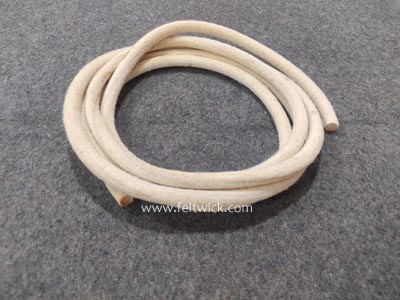
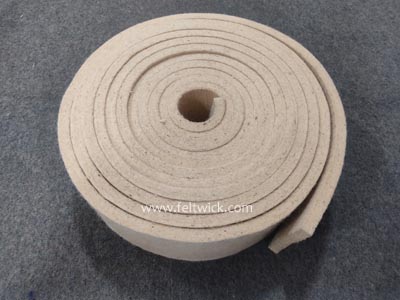
Oil wicking felt :
Oil wicking material is a fabric or felt that sucks up oil and delivers
it to the other end by capillary action. Felt oil wick capacity is
measured by the level of height to which the oil is absorbed on felt if
vertically held. The more thickness and size of felt determines the
volume of oil which it wick. The Viscosity of oil has also a greater
role in wicking function. Oil wicking can be done in many types like
absorbent or pad feed, top feed, bottom wicking, siphon wicks. If two
wicking felt is of same shape density then it will lift oil to a similar
level irrespective to the thickness of felt. Wool wicking felt has the
ability to absorb any oil and deliver constant flow of oil. Wicking felt
allows the oil to move through gap in all directions. Felt wicking
transfers liquid by capillary action. We are oil
wick manufacturer and
can supply you felt wicking and lubrication in all shapes and sizes.
Wool wicking felt has the ability to absorb any oil and deliver constant
flow of oil. Wicking felt allows the oil to move through gap in all
directions. Felt wicking transfers all types of
liquid by capillary action. This reliable, gravity-defying
"all-loss" method is used across various classic, industrial, and
specialized machinery.
Classifications of Oil Wick Feed Systems
The subject of oil wick
felt and lubrication embraces the application of felt of
wick feed lubricating system for bearing and other mechanical movements,
where oil or other coolants ate required to be fed in a controlled
manner without failure or interruption. Lubricating system of this type
may be classified as
(1) Absorbent or pad feed (2) bottom feed
wicks (3) syphon feed wick (4) top feed
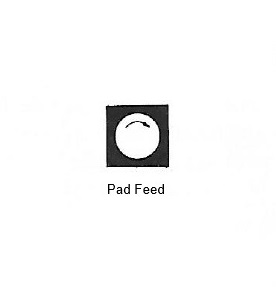
• Absorbent or pad feed wick :
Felt pads are pre-soaked or spring-loaded against the bearing surface,
constantly wiping the moving parts to release a thin, controlled film of
oil.
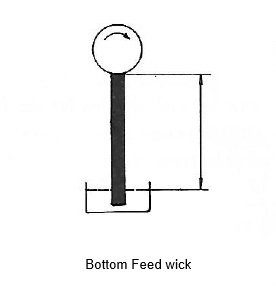
• Bottom feed wick :
The felt rests below the oil reservoir. Oil travels upward via capillary
action to be deposited on the rotating shaft or bearing.
• Syphon feed wick : This system relies on a felt wick
material, to transfer oil or water from a raised reservoir to a lower
target area. It replaces traditional hollow tubes and eliminates the
need to manually establish a vacuum to start the flow. Typically draped
over a dividing wall inside an oil cup, this configuration uses the
siphoning principle to draw lubricant over the barrier and drop it onto
the bearing surface.
Oil delivery Rates of Felt wick by Siphoning system : It is realized
that as the viscosity of the oil is increased, and/or as the temperature
is decreased, the oil delivery rates will be less for all of the felt
wick. When a low viscosity oil is used or the temperature is increased,
the delivery rates will be greater.
• Top feed wick : Oil drips from an overhead reservoir
onto a felt wick, which regulates the flow rate and filters out
contaminants before the lubricant reaches the moving components.
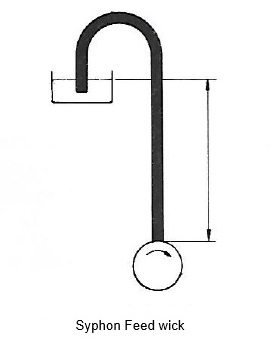
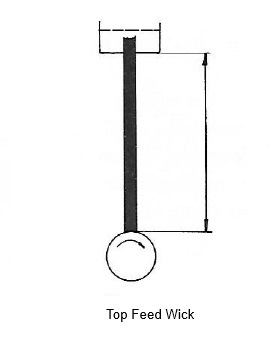
Siphon and pad feed lubricating or wick systems are the most widely used
although bottom
wick systems are generally considered the most efficient. They are
entirely automatic, require no
attention, other than occasional cleaning; and allow a return of the
unused liquid to reservoir. In
top feed applications, where there is a reservoir, with a wick extending
from a bottom outlet, the
wick functions as a semi-controlled obstruction. The system to be used
for any application is that
which satisfies design and operating conditions. In all cases, a first
consideration is the selection
of proper materials to transport oil based lubricants.
Why our oiler felt wick is Good for oil wicking and Lubrication
Being Oil wick manufacturer our
oiler felt is made up of a large number of capillaries which are formed
between the fibres. These capillaries hold the oil, and the oil is
wicked through them to a metal part. The number and size of the
capillaries in a oiler felt are dependent almost entirely on the density of
the fibre in the felt. The greater the felt density and the finer the
fibres, the greater the number and the finer the capillaries.
Finer capillaries not only transport or wick liquid longer distances and
higher heights, they also hold the liquid more tenaciously. This liquid
holding capacity makes felt materials both effective and efficient as
liquid reservoirs. Some oiler felt can absorb some four to five times their
own weight of oil. In addition, certain felts have good resistance to
and good recovery from compression. Thus, they have the ability to
maintain their capillary structure under compression and other stresses.
Oiler Felt also has ideal surfaces for transferring oil to Axles or other
moving metal parts. It does not ravel, it can give up its oil either
slowly or quickly depending on the type of felt and the application.
Wool felt has particularly good resistance to heat, and will not glaze
when properly applied. Lubrication by felt, or any other material is
stopped when its capillaries are blocked, either by dirt or by
compression or by pinching, etc. In fact, this is one of the
disadvantages of woven fabrics for lubrication. Besides their tendency
to unravel easily, where the wrap and filling yarns interlace the
capillaries are pinched off and flow of the liquid in the yarn is
blocked or slowed down.
Some oil felt wick are much better than others for the various types of
lubrication; the performance of a felt depends on the type of oil
lubricant used, the temperature of the oil and on the actual lubrication
job the felt has to do. It can be said that no one felt is best for all
lubrication purposes. Thus, as much care should be exercised in the
selection of felt wick materials, as required in the selection of
suitable lubricants.
Uses :
Tape Dispenser
Feeders: Used in specialized machines (like gummed tape dispensers)
to wick water or thin oils evenly across dispensing brushes or
blades.
Industrial Sewing Machines: Classic and heavy-duty
models rely heavily on a network of internal felt wicks to route oil
up from the main oil pan to otherwise unreachable overhead needle
bars, gears, and crank linkages.
Industrial Textile Looms:
Shuttles, spinning frames, and weaving machinery use oil wicks to
maintain a continuous, thin film of oil over high-speed mechanical
components without causing heavy dripping that could ruin fabrics.
Metal Lathes: Lathe bearing oiler wicks
are used in many turning lathes has oil cups fitted with wire-inserted
oiler wicks to regulate oil delivery down into the apron gears and
carriage ways.
Old Model Drill Presses and Milling Machines:
Older workshop machinery has "oil cups" at critical sleeve
bearing junctions where felt oil wicks restrict the oil flow so it drips
slowly rather than draining immediately.
Fractional
Horsepower Electric Motors: Many electric motors of workshop
grinders and blowers contain porous bronze sleeve bearings packed
tightly with our oil-saturated wool felt wicks to continually
lubricate self-aligning sleeve bearings.
Industrial
Centrifugal Pumps: Older-style shaft bearings on fluid pumps utilize
oil cup reservoirs outfitted with internal oil wicks to protect the
spinning shaft against heat and friction.
Kerosene Heaters
and Lamps: The traditional
Kerosene heater and oil lamps rely on a
oil wick to consistently draw liquid fuel up to the burner plate via
capillary action. Garden torch wicks draw liquid fuel (such as
citronella or paraffin oil) to the flame. Depending on your setup,
they are typically made from Wool for easy
use and lighting .
Plug-in Air Fresheners:
Devices like the Air Wick Scented Oil Warmer utilize
our High quality porous wick inside a
glass refill container. Our
felt wick absorbs the
scented essential oils and transports them up to a heating element
for dispersion.
Rocker arm felt wicks in vintage car engines : The rocker feeds
the valve and the pushrod. The valve end has a felt wick internal which
is sealed on the end. Rocker arm felt wicks act as a slow-release oiling
mechanism in Vintage classic cars and motorcycles engines. Inserted into
oil passages or drilled hollow rocker shafts, the felt absorbs oil from
the engine and slowly wicks it to lubricate the rocker arm pivots or
valve stems.
Why oiler felt is best oil wicking material - Our Felt
wick is considered the best oil wicking material because of its
uniform density and High capillary action. Unlike other material,
oil felt wick consists of thousands of microscopic, interlocking
wool fibers that act as tiny pumps. This unique structure offer
exceptional advantages:
◆ Uniform Capillary Action: The dense
network of micro-gaps reliably draws oil upward or downwards at a continuous, predictable rate.
This unique gravity defying process is natural.
◆ Superior Retention: Oiler Felt wick holds significantly more
fluid than its own weight, ensuring a steady reservoir of oil for
critical components for longer period of time.
◆ Filtration & Protection: The unique fiber entanglement
acts as a natural filter, preventing dust, sludge, and
debris from reaching bearing duting operation.
◆
Durability: Our wool felt wick material resists material degradation, tearing,
and melting, even when continuously submerged in heavy oils or
exposed to continuous friction.
We
manufacturer of Oil Wick and can supply you full range of Oil
wicking felt.