Self watering felt wick for plants
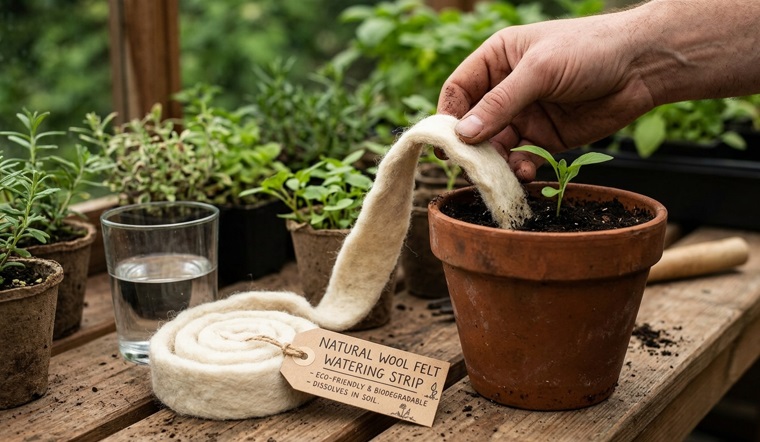
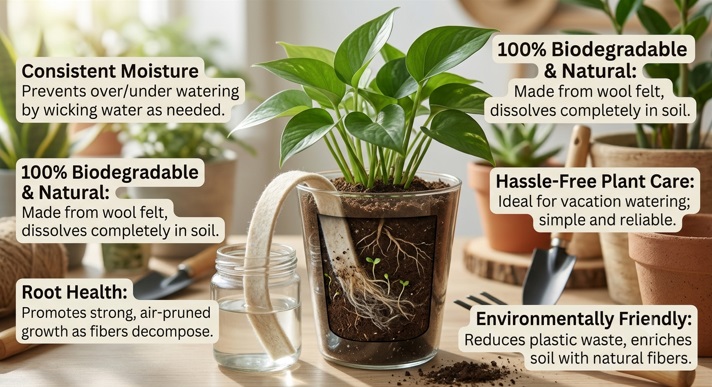
Wool felt wick or capillary pad wick is an excellent, natural, and highly absorbent medium for self-watering plants. A self-watering wool wick uses capillary action to pull water from a reservoir directly into your plant's soil. It acts like a microscopic straw network "sipping straw" to provide slow, steady hydration , a continuous water transporter, drawing moisture from a reservoir directly delivering into your potting soil as it dries, which is a low-stress tool for frequent travelers and perfect for vacations and consistent moisture control. This makes it a great, low-maintenance way to keep plants hydrated.
How Wool Felt Wick Works :
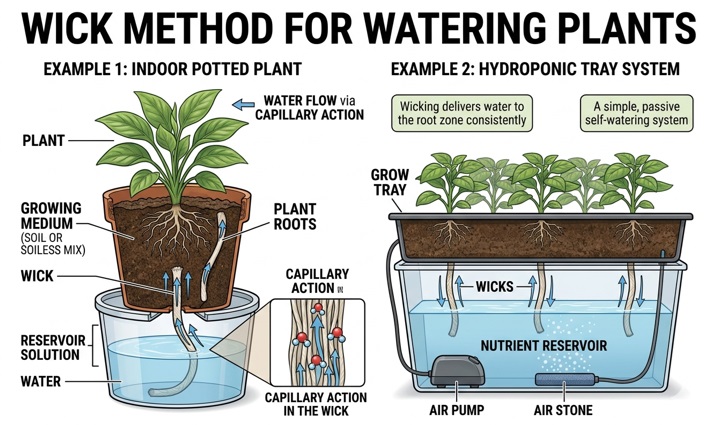
Wool felt wicks use capillary action to water your plants. One end
sits in a water reservoir, and the other touches the soil. The felt
soaks up water and slowly pulls it upward against gravity. As the
plant's roots drink and the soil dries, the wick automatically
releases more water to keep it moist.
Here is exactly how a
self watering plant wick does this:
The Science of the Wick
Adhesion and Cohesion: Water naturally likes to stick to surfaces
like wool fibers (adhesion). Because water molecules also like to
stick to each other (cohesion), one water molecule pulls the next
one up the wick like a chain.
No Machines Needed: This
process takes no energy or pumps. It is a completely passive system.
Why Wool Works So Well
Natural Pores: Wool felt wick is a
dense mat of tangled sheep hair. These tangled wool wick fibers create tiny
spaces that act as microscopic pipes to move water efficiently.
Highly Absorbent: Wool can hold a large amount of water inside
its fibers while remaining relatively sturdy and spongy. These
water transmitting wicks also releases water efficiently.
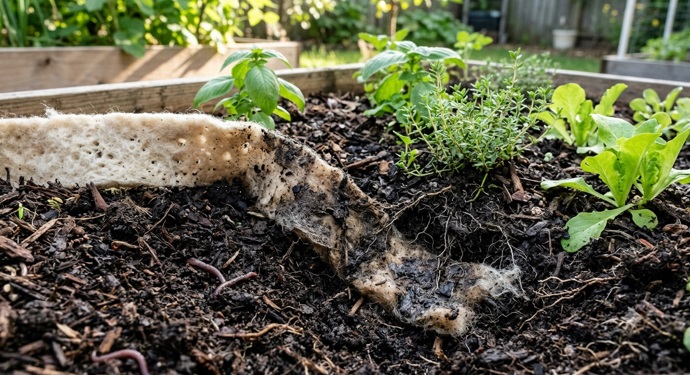
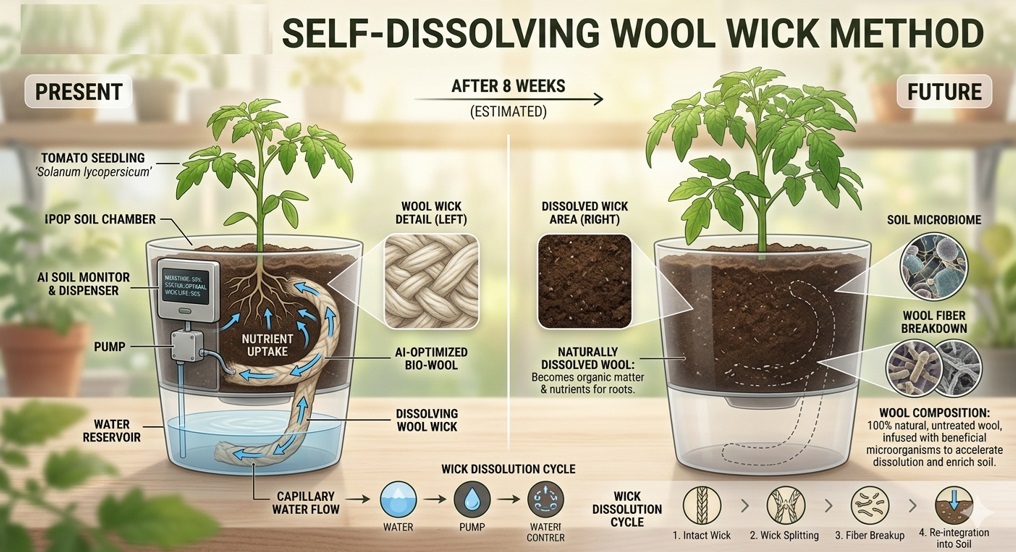
Eco-friendly and self dissolving material: Wool can rot and decompose in
water after a few weeks giving also it nutrients to soil.
Smart Watering on Demand
The Plant
Controls It: The wick does not flood the plant. The soil only pulls
water from the wick if the surrounding dirt is dry.
Prevents
Rot: If the soil is already wet, it stops pulling water. This helps
prevent root rot from over watering.
Vacation Proof: You can
leave the water reservoir full while you are away, and the plant
will automatically "drink" for days or weeks depending on the
reservoir size.
A
Automatic Self Plant Watering Systems comprises a
capillary wick for plants configured in a self-siphoned arrangement to
draw a watering fluid from a common raised reservoir to a crest thereof
via a wicking or capillary action to watering destinations
via a siphoning action initiated by the wicking action. An
end of a wick may be exposed for insertion into the reservoir and a
second exposed end configured to siphon water to soil of the plant.
Water Absorption: High-quality
watering wick cord can absorb many times its own weight
in water.
Nutrient Release: Natural sheep's wool felt slowly breaks down over
time, releasing natural nutrients directly into the soil.
DIY
self watering wicks for plants & Mat Setup Methods
You can easily transform everyday pots into Self Siphoning Plant Feeding
Device and self-watering systems using our self watering wool felt wick .
1. The "Wick" Method (For Individual Pots)
Cut a strip of wool felt (about 0.5 cm to 1 cm wide).
Thread the strip through the drainage hole at the bottom of your nursery
pot, pulling about 5 cm to 7 cm up into the root zone.
Place the pot inside a slightly larger, waterproof decorative pot or
saucer that contains water. The wick will pull water upward
continuously.
2. The "Matting" Method (For Seedlings or Multiple Pots)
Place a sheet of
capillary watering wicks on a waterproof tray.
Fill one side of the tray with water or hang the edge of the
water wick into a water reservoir.
Set your potted plants directly on top of the pre-moistened wool felt pad.
The soil will pull water up as needed like
self watering wool capillary wick.
Advantages of
wick watering house and outdoor plants:
The Good:
● Prevents under-watering while you are on Holiday vacation.
● Reduces the risk of root rot from dry spells or soggy, over-watered
soil.
● Gives plant parents the convenience of only needing to refill the
water reservoir.
● Natural, Eco-friendly material which self dissolves in soil.
The Bad:
● Not for All plants : Succulents, cacti, and orchids will suffer from
rotting roots if it is kept constantly in damp condition.